

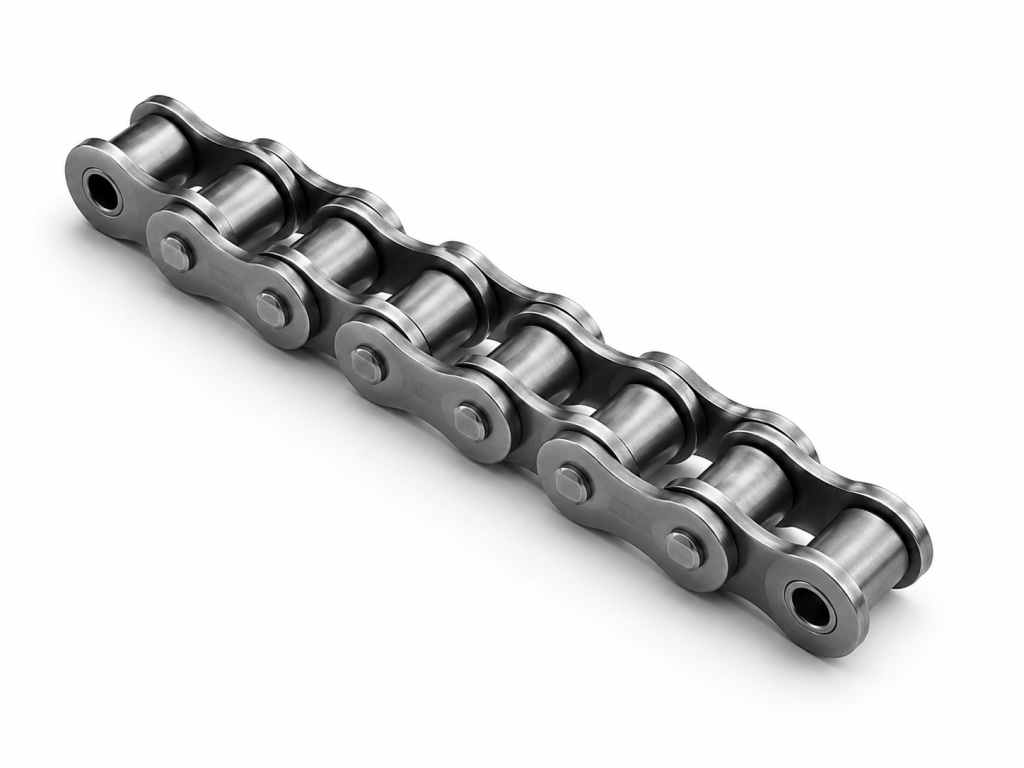
Chains
UAB Dukranos grupė supplies industrial and drive chains to companies across Lithuania and the Baltic region. The range includes steel, stainless steel and cast iron chains for conveyors, transporters, lifting equipment and other heavy-duty applications.
We work with trusted global manufacturers, so we can offer both standard dimensions and solutions built to your technical specification. We advise on chain type, pitch, width and mounting — reducing downtime and extending equipment life.
Drive and transmission chains
Conveyor and lifting chains
Chain attachments, tensioners, guides
Didn’t find the right option in the catalog? Submit an inquiry – we will prepare a commercial quote and confirm delivery terms.
What matters when choosing an industrial chain?
When choosing an industrial chain you need to assess four key parameters: pitch, permissible load, operating environment (moisture, temperature, chemicals) and required service life. ISO 606 and ANSI B29.1 standards determine compatibility with existing sprockets. If the chain will run in the food, pharmaceutical or chemical industry, choose stainless steel or specially coated versions.
How do drive, conveyor and lifting chains differ?
Drive chains (roller chains) transmit torque between sprockets and are used in drives, bicycles and industrial machines. Conveyor chains are designed for moving materials and often have additional attachments for production lines. Lifting chains (leaf chains) are made of layered plates, withstand very high static loads and are used in forklifts and hoists.
When are stainless steel or reinforced chains worth choosing?
We recommend stainless steel chains in the presence of moisture, corrosion, chemicals or food-industry hygiene requirements. Reinforced chains (HI-PRO, REXPRO series) are worth choosing when 30–50% more load is needed than the standard equivalent allows, or to extend the replacement interval in demanding conditions. In both cases the price is higher, but overall operating costs are lower.
How long does chain delivery take and how quickly can I get it?
Standard drive chains (ISO 08B to 24B, ANSI 40 to 160) are usually in stock and delivered within 1–2 business days. Special versions — stainless steel, reinforced, with attachments — need 3–10 business days. Submit an inquiry with the required pitch and length, and within 1 business day you will receive specific availability and pricing.

